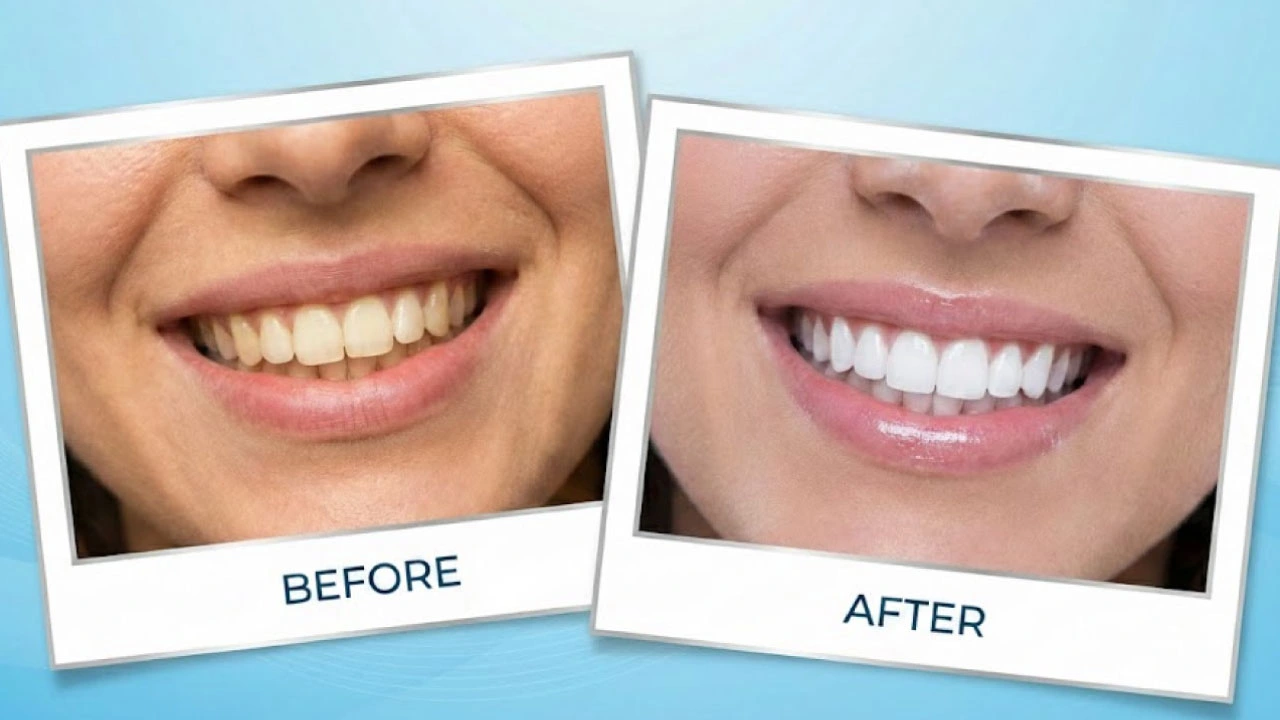
No, you do not have to get veneers on all teeth in most cases. Veneers on every tooth are rarely required because treatment usually focuses on the visible front teeth that shape your smile aesthetics. When patients ask, “do you have to get veneers on all teeth,” the real concern is whether a complete smile transformation requires covering the entire mouth or just selected teeth.
Veneers are a cosmetic dental solution that uses ultra-thin, custom-made medical grade shells bonded to the front surface of teeth to improve colour, shape, and smile line. Treatment can involve Partial veneer treatment on the upper front six to ten teeth or, in limited cases, a Full-Mouth Veneer Treatment. The decision depends on smile line visibility, dental health, occlusion, and aesthetic goals.
This guide explains how veneers work, when partial veneer treatment is enough, when full smile makeover cases require broader coverage, and how dentists customise veneer placement using digital smile design. It also outlines risks, alternatives, long-term care, and how veneers affect natural teeth.
Key Takeaway
- Most patients do not need veneers on every tooth.
- Treatment usually focuses on visible front teeth, especially the Upper front six to ten teeth.
- Partial veneer treatment preserves enamel and supports dental health.
- Full-Mouth Veneer Treatment is reserved for severe wear, discoloration, or full smile makeover cases.
- A veneers dentist consultation ensures balanced and harmonious appearance with proper occlusion.
Understanding Veneers on All Teeth
Veneers are thin dental laminates placed on the front of teeth to improve smile aesthetics. They are a cosmetic dental solution for:
- Stains and discoloration
- Chips, cracks, and fractures
- Misaligned or uneven teeth
- Gaps between teeth
- Worn down teeth
- Irregularly shaped teeth

There are 4 common types of veneers:
- Porcelain veneers – durable and natural-looking.
- Emax veneers – high-strength lithium disilicate porcelain.
- Lumineers (No-Prep Veneers) – ultra-thin and require minimal preparation.
- Composite veneers – resin-based and completed in fewer visits.
Each type differs in durability, translucency, and cost.
What Are Veneers on All Teeth And How Do They Work?
Veneers work by bonding a thin shell to the enamel of the tooth. The dentist removes a small amount of enamel to create space, then bonds the veneer using dental cement.
The procedure includes 5 steps:
- Assess dental health and occlusion.
- Plan using digital smile design (DSD).
- Prepare enamel conservatively.
- Take impressions for custom-made medical grade shells.
- Bond and polish for a natural-looking finish.
Veneers improve colour, shape, and alignment without replacing the entire tooth like crowns.
Do You Need Veneers on Every Tooth?
No, veneers on every tooth are not necessary for most patients. Dentists usually treat only the teeth visible when smiling to enhance the aesthetics and maintain function.
Partial Veneer Treatment: The Most Common Approach
Partial veneer treatment is the standard approach. It typically includes:
- Upper front six to ten teeth
- Central incisors
- Lateral incisors
- Canines
- Sometimes first premolars
- Occasionally lower front teeth if visible
Benefits of this limited veneer approach include:
- Enamel preservation strategy
- Conservative veneer preparation
- Lower all teeth veneer cost
- Faster treatment time
- Better veneer edge blending with adjacent teeth
Selective veneer placement focuses on cosmetic zone veneers rather than veneers every tooth.
Full-Mouth Veneer Treatment: When Is It Needed?
Full-Mouth Veneer Treatment is recommended in 4 specific cases:
- Severe discoloration affecting most teeth.
- Extensive wear from bruxism or acid reflux.
- Generalised fractures or cracks.
- Desire for a Full Smile Makeover with uniformity.
Full mouth veneers involve placing veneers on all front and back teeth in one or both arches. This approach increases veneers on all teeth price and requires careful occlusion planning to maintain chewing efficiency.

Customizing Your Veneers on All Teeth Treatment
Every patient requires a tooth-by-tooth decision. Dentists assess:
- Individual tooth requirements
- Smile line exposure
- Bilateral veneer symmetry
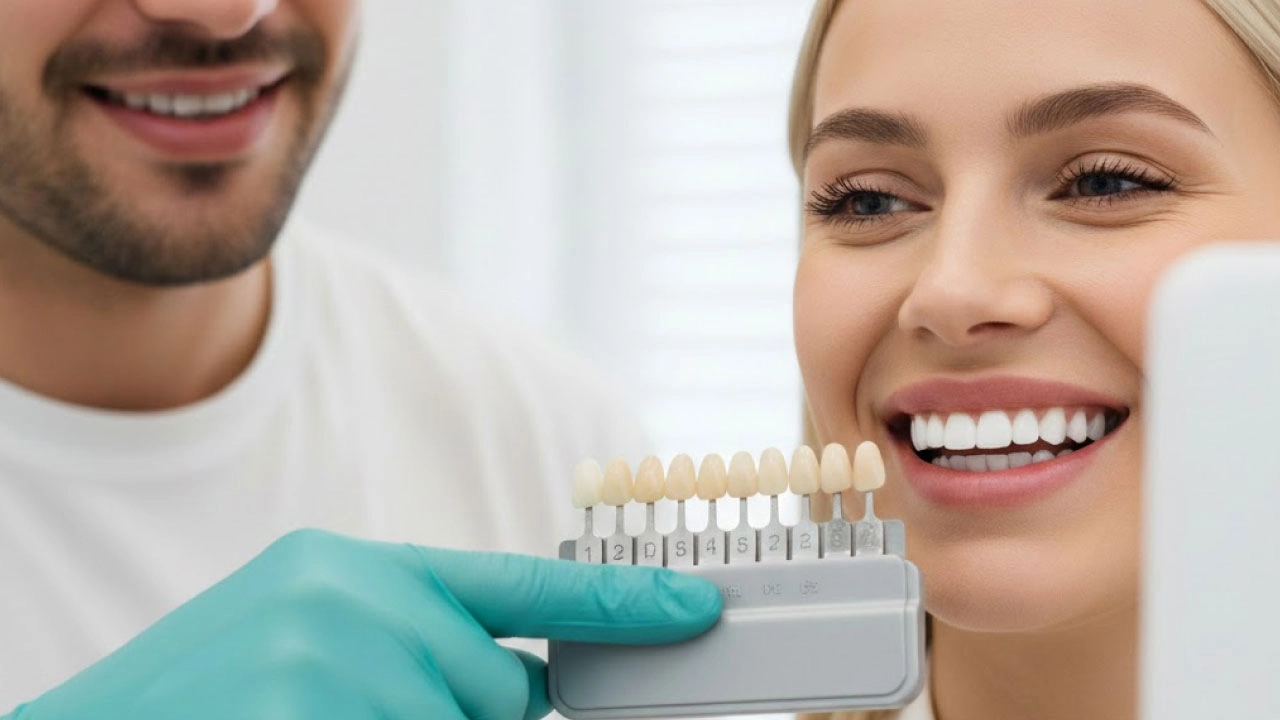
- Veneer color matching
- Adjacent teeth considered for blending
Digital smile design helps customise veneer placement to achieve a balanced and harmonious appearance.
Factors Determining How Many Veneers You Need
There are 4 main factors determining veneer numbers.
Smile Line Visibility
Smile line determines how many visible front teeth show during speech and smiling.
- Low smile line: 4–6 veneers.
- Average smile line: 6–8 veneers.
- Broad smile line: 8–10 veneers.
Only teeth within the cosmetic zone typically receive veneers.
Tooth Condition And Health
Healthy teeth and gums are required before veneers.
- Minor Stains or Chips: 2–4 veneers.
- Uneven Smile With Multiple Imperfections: 6–8 Veneers on All Teeth.
- Teeth with decay or large fillings may require crowns instead.
Dentists protect enamel and avoid unnecessary veneer uniformity when teeth are already healthy.
Bite And Function
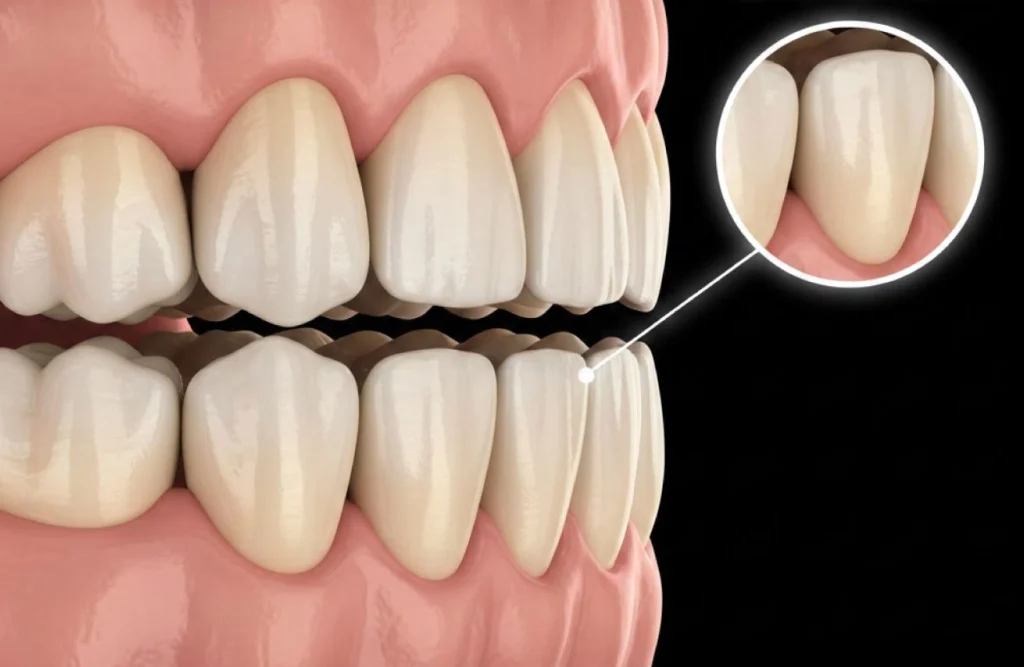
Occlusion determines how upper and lower teeth meet. Poor planning can:
- Reduce chewing efficiency
- Cause jaw misalignment
- Lead to veneer fractures
Dentists evaluate function before recommending veneers whole mouth.
Cosmetic Goals And Expectations
Aesthetic goals influence veneer numbers:
- Subtle correction: 2–4 veneers.
- Balanced smile: 6–10 veneers.
- Complete smile transformation: 10–20 veneers.
Veneers for complete smile must align with function, not just appearance.
Common Scenarios And Veneer Numbers
There are 3 common scenarios:
- Minor Stains or Chips – 2 to 4 veneers.
- Uneven Smile With Multiple Imperfections – 6 to 8 veneers.
- Full Smile Makeover – 10 to 20 veneers including upper and sometimes lower teeth.
Single veneer sufficient? Yes, if only one tooth requires cosmetic correction.
Benefits Of Partial Veneer Placement
Partial veneer options offer 5 advantages:
- Preserve natural enamel.
- Reduce veneers cost per tooth overall.
- Maintain natural adjacent teeth.
- Support long-term dental health.
- Lower veneer longevity factors risk due to reduced load.
This limited veneer approach supports conservative dentistry.
Risks Of Applying Veneers To Every Tooth
There are 4 risks of veneers on entire mouth without necessity:
- Excessive enamel removal.
- Higher full set veneers cost.
- Increased veneer material limitations under heavy bite.
- Greater long-term maintenance requirements.
Mandatory full mouth? No, unless clinical need exists.
Be Wary of Over-Treatment
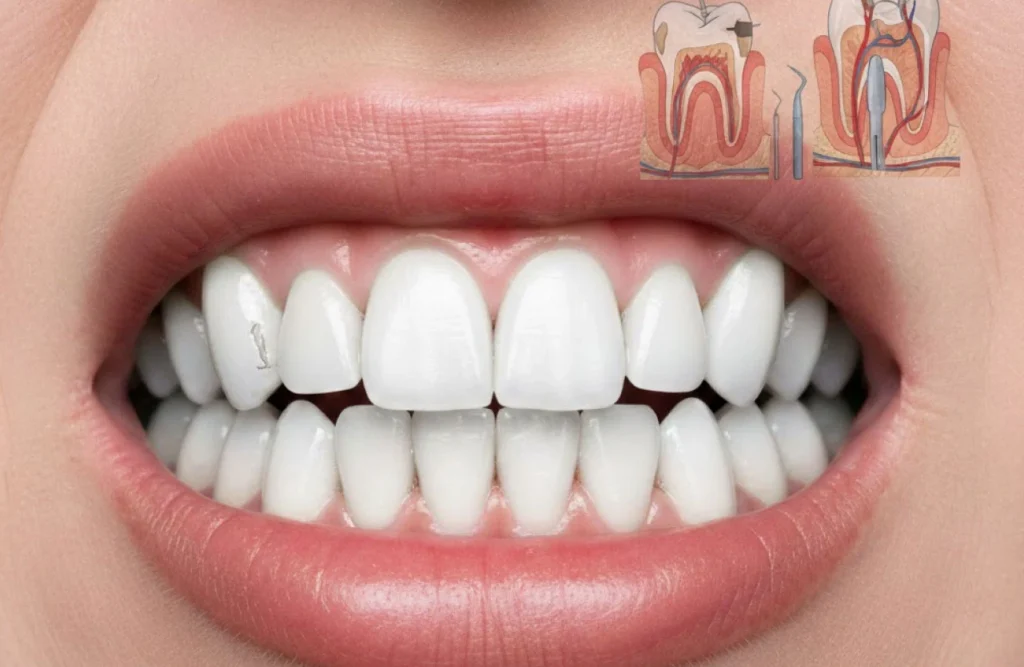
Patients should avoid dentists who recommend veneers on all teeth necessary without clear diagnosis. Veneers are irreversible once enamel is removed.
Ask these 3 questions:
- Is veneers on every tooth clinically required?
- Are adjacent teeth considered?
- Is occlusion stable?
Expert veneers dentists prioritise dental health over cosmetic excess.
Alternatives To Having Veneers On Every Tooth
There are 5 veneers alternative options:
- Teeth whitening for colour correction.
- Composite veneers for minor adjustments.
- Lumineers or No-Prep Veneers for ultra-thin coverage.
- Orthodontics for misaligned teeth.
- Crowns for severely damaged teeth.
Veneers all teeth alternative plans reduce invasiveness and cost.
Long-Term Care And Maintenance
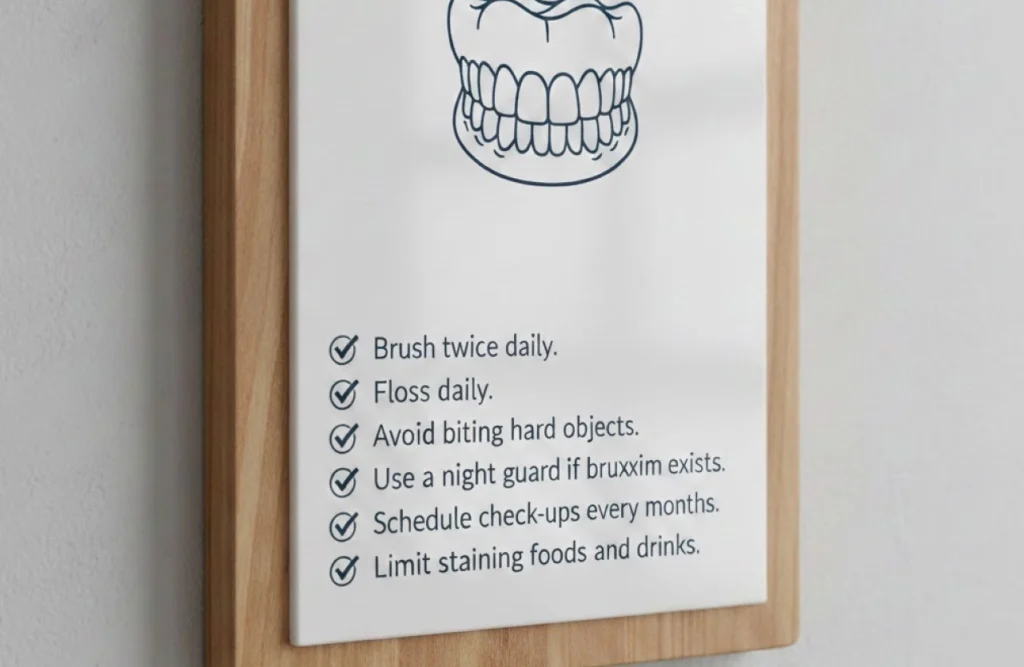
Follow 6 maintenance steps:
- Brush twice daily.
- Floss daily.
- Avoid biting hard objects.
- Use a night guard if bruxism exists.
- Schedule check-ups every 6 months.
- Limit staining foods and drinks.
Proper care supports veneer longevity and gum health.
Understanding Veneer Longevity And Durability
High-quality porcelain veneers and Emax veneers last 15–20 years. Composite veneers last 5–8 years.
Durability depends on:
- Occlusion balance
- Enamel bonding strength
- Oral hygiene
- Absence of bruxism
Veneer longevity factors vary by material and patient habits.
How Veneers Affect Natural Teeth
Veneers require minimal enamel removal. Partial veneer placement preserves more tooth structure than full coverage crowns.
Full mouth veneers increase enamel alteration across the entire mouth. Conservative veneer preparation protects long-term tooth stability.
Consultation With A Cosmetic Dentist
A veneers dentist consultation determines:
- Exact veneer numbers
- Veneer material choice
- Compatibility with bite
- Realistic aesthetic goals
Conclusion
You do not have to get veneers on all teeth in most situations. Veneers on every tooth are only recommended when severe wear, discoloration, or a full smile makeover requires complete smile transformation.
Most patients benefit from Partial veneer treatment on visible front teeth to improve colour, shape, and smile line while preserving enamel and function. Full-Mouth Veneer Treatment is reserved for extensive cosmetic correction and requires careful occlusion planning.
A consultation with experienced dentists ensures a cosmetic dental solution that supports dental health, aesthetic goals, and a balanced and harmonious appearance without unnecessary treatment.