
Brushing your teeth with baking soda is a simple, low-cost method to help clean your teeth, reduce plaque, and whiten them naturally. Baking soda, also known as sodium bicarbonate, works by neutralizing acids in your mouth, disrupting biofilms, and gently polishing the surface of your teeth. While it can be effective for certain dental hygiene needs, it doesn’t provide fluoride, which is essential for cavity prevention. Understanding how baking soda works, its benefits, and the best way to use it can help you decide if it’s right for your oral care routine.
Does baking soda work as a toothpaste?
Yes, baking soda can work as a toothpaste. Its mildly abrasive properties help clean your teeth, remove surface stains, and reduce plaque and gingivitis. Sodium bicarbonate is effective at raising the pH in your mouth, creating a less acidic environment where cavity-causing bacteria struggle to thrive. While it doesn’t provide fluoride, toothpastes containing baking soda offer additional antibacterial properties that can help support oral health.
Is It Safe to Brush Your Teeth With Baking Soda?
Brushing with baking soda is generally safe when done occasionally and gently. Baking soda’s mild abrasive nature can polish teeth without causing significant enamel erosion if used correctly. However, excessive or aggressive brushing may damage tooth enamel and irritate your gums. For people with braces, permanent retainers, or dental restorations, using a baking soda paste directly can weaken adhesives and damage porcelain crowns.
Baking Soda for Teeth Whitening
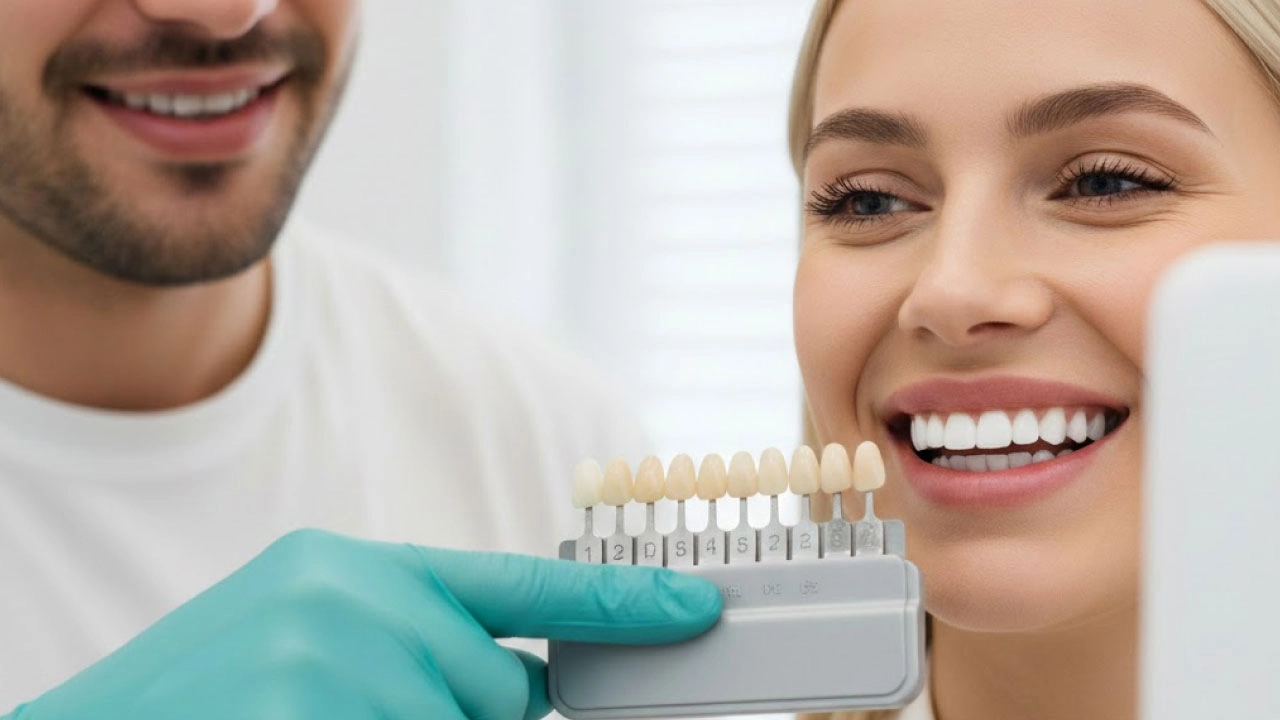
Baking soda is known for its natural whitening properties. It can remove surface stains caused by coffee, tea, and tobacco through its gentle abrasive action. This makes it a popular ingredient in many commercial whitening toothpastes.
Baking Soda for Plaque Removal
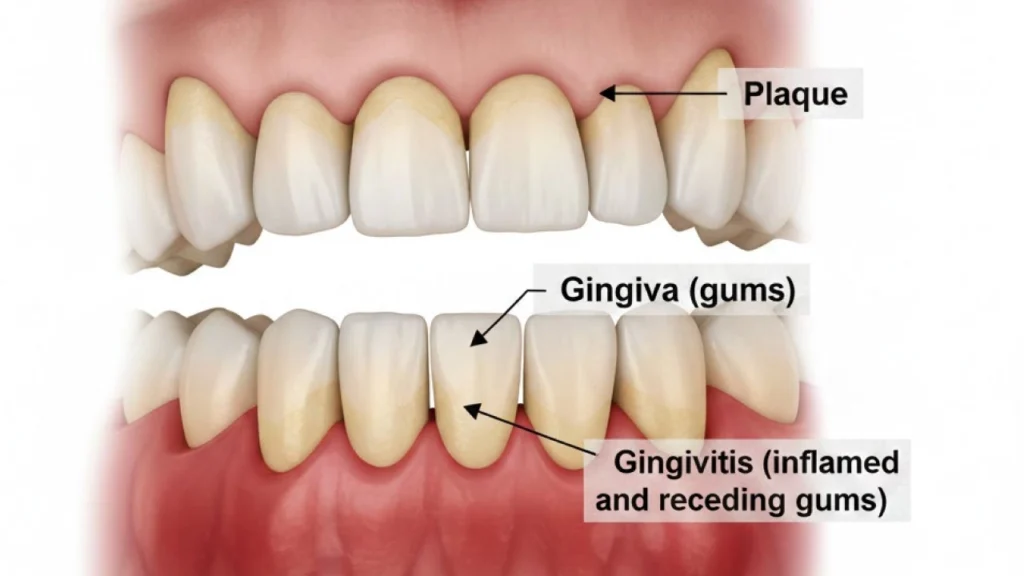
Baking soda disrupts biofilms, which are colonies of bacteria that attach to your teeth as plaque. By brushing with a baking soda paste, you can remove plaque more effectively than brushing with non-baking soda toothpaste alone. Its ability to neutralize acids further helps prevent enamel erosion and cavity formation.
The Best Way to Use Baking Soda for Dental Health
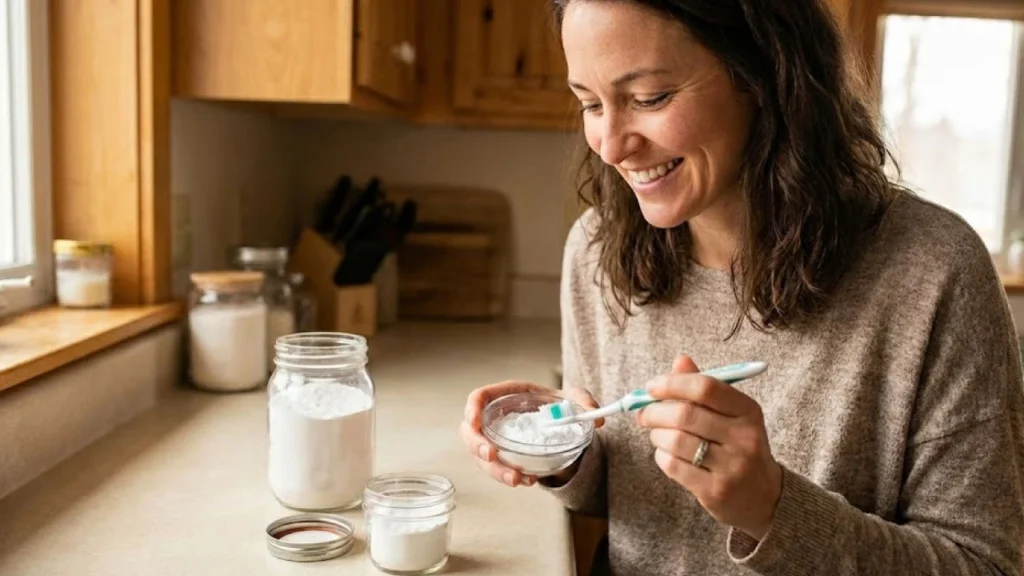
The safest way to enjoy baking soda’s benefits is by using a toothpaste that contains it. These formulations balance its cleaning power with fluoride to protect tooth enamel and prevent cavities. When making a homemade baking soda paste, mix equal parts baking soda and water, brush gently in circular motions for one to two minutes, and rinse thoroughly.
What are the pros and cons?
Baking soda offers several advantages for oral health but also comes with limitations. Understanding both sides will help you use it safely and effectively.
Advantages
Reduces plaque and gingivitis
Baking soda disrupts bacterial biofilms, lowering the bacteria count on your teeth. This helps reduce plaque accumulation and prevents gingivitis.
May reduce bacteria
By raising the pH in your mouth, baking soda creates a less acidic environment. A 2017 study found that this can make it harder for cavity-causing bacteria to thrive.
Whitens teeth
Its mild abrasive action removes surface stains, providing natural teeth whitening without harsh chemicals.
Is a fluoride-free option
Baking soda is an alternative for those who prefer to avoid fluoride, though it should not fully replace fluoride toothpaste for long-term cavity prevention.
Is inexpensive
Baking soda is widely available in grocery stores, drugstores, and big-box retailers at a fraction of the cost of commercial toothpastes.
Disadvantages
Unappealing taste and texture
Straight baking soda has a salty taste and gritty texture that many find unpleasant.
Less dramatic whitening
While effective at surface stain removal, baking soda may not provide the same whitening results as products with hydrogen peroxide or microbead abrasives.

Lack of fluoride
Without fluoride, baking soda cannot provide the cavity protection that many fluoride toothpastes offer.
How to use it to clean your teeth
Instructions
- Mix equal parts baking soda and water to form a paste.
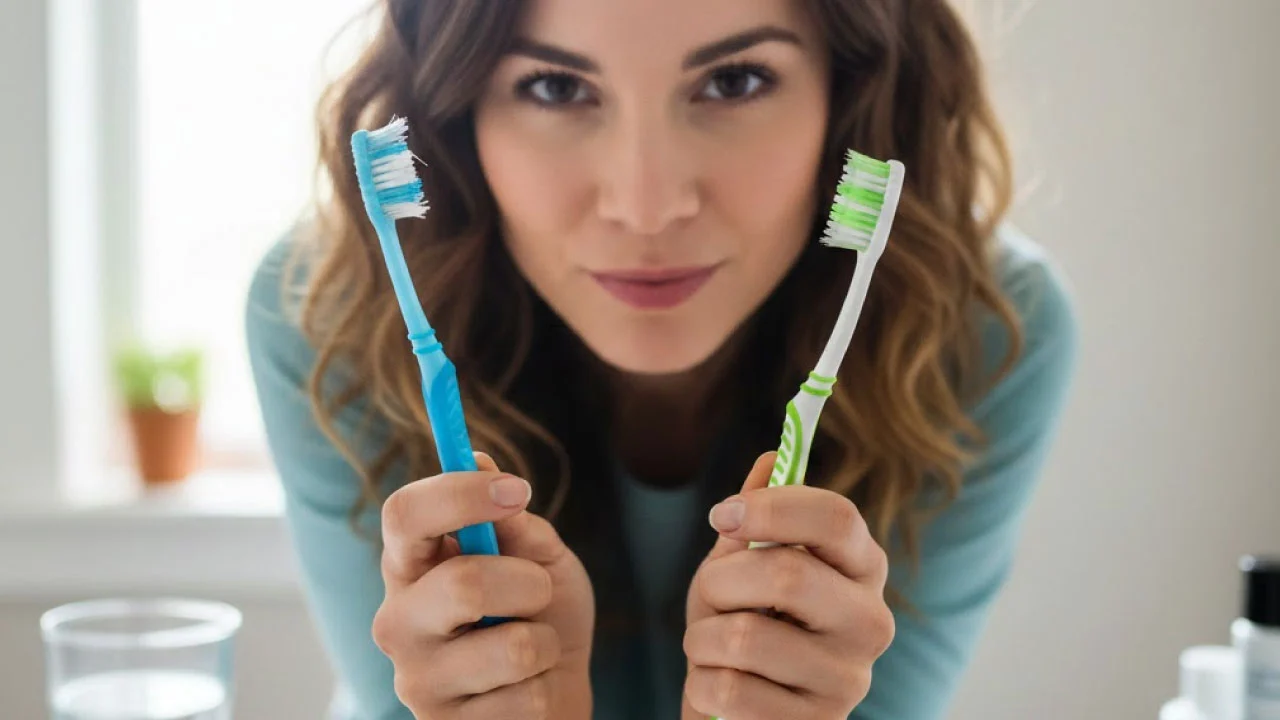
- Dip your toothbrush into the paste.
- Brush gently in circular motions, covering each tooth for 1–2 minutes.
- Rinse your mouth thoroughly with water.
Avoid adding acidic ingredients like lemon juice or apple cider vinegar, which can erode tooth enamel and increase cavity risk. For better taste, you can add a drop of peppermint oil.
What about toothpastes that contain baking soda?
Baking soda toothpaste combines sodium bicarbonate and fluoride. Many formulas provide stain removal plus cavity protection. Studies show toothpastes containing baking soda are more effective at removing plaque than those without it.
Choose a toothpaste with the ADA Seal of Acceptance from the American Dental Association (ADA). Dentists recommend this option for balanced dental hygiene.
What else works for teeth whitening?
There are 4 common whitening options:
- Hydrogen peroxide products – Oxidize stains and provide stronger whitening.
- Professional treatments by a dentist – Higher concentration whitening agents.
- Activated charcoal – Abrasive stain removal; use cautiously.
- Coconut oil pulling – May reduce oral bacteria but limited whitening evidence.
Avoid brushing with lemon peel, lemon juice, or apple cider vinegar. These acids weaken tooth enamel and increase dental erosion risk.
The bottom line
Baking soda is an affordable, accessible, and effective teeth cleanser. Its mildly abrasive properties and pH-neutralizing action make it useful for whitening teeth and removing plaque. However, it lacks fluoride, so it’s best used in moderation or alongside fluoride toothpaste. Brushing gently, monitoring enamel health, and consulting your dentist can help you maximize benefits while minimizing risks.
Baking soda can work well as part of your dental hygiene routine, but it should complement, not fully replace, standard toothpaste for optimal dental health.